
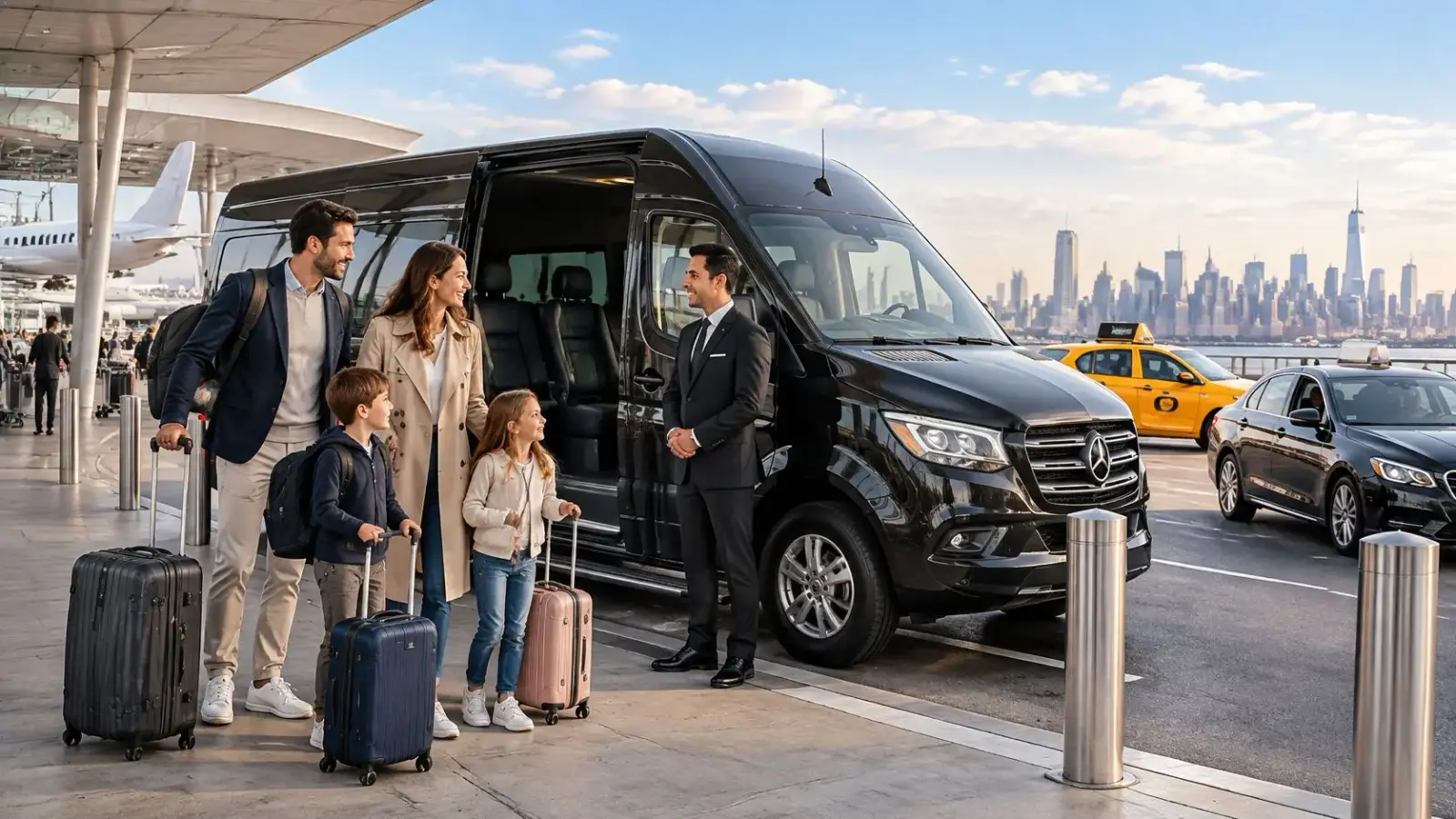
A party of eight clears baggage claim at JFK with eight checked bags, two carry-ons apiece, and a hotel check-in waiting in Manhattan. One traveler looks for a taxi. Another opens a rideshare app. A third asks whether the train is faster. Each answer works for a solo traveler, and each answer breaks differently for eight people who need to arrive together.
That is the problem a JFK airport shuttle Manhattan search usually hides. The cheapest seat, the nearest cab, and the fastest train are different questions from one workable plan for a whole party. Headcount and bag count decide more than the headline fare, because they determine how many vehicles are needed, how many transfers are made, and who carries what between the terminal door and the Manhattan address.
Table of Contents
- JFK to Manhattan Options Compared
- Transit Versus a Van for Groups
- What the Taxi Flat Fare Leaves Out
- How to Plan a JFK Curbside Pickup
- Trips That Need One Vehicle
- Request a Quote Before You Count on the Van
JFK to Manhattan Options Compared
A group landing at JFK doesn't need a ranking of vehicles. It needs the row that fits its size, so the table leads and the explanation follows.
| Option | How the ride works | Fits best | How cost is set | Party handling |
|---|---|---|---|---|
| Shared airport shuttle | Seat on a multi-stop vehicle | Solo traveler or pair with light bags | Per-seat fare, extra stops add time | Seats sold per passenger, party may not stay together |
| Yellow taxi | Regulated cab on the JFK-Manhattan flat fare | One to three people with moderate bags | $70 base before tolls, tip, and surcharges | One cab, larger parties may need more cabs |
| Rideshare | App-dispatched car by vehicle class | One to four people, or a larger class if available | Set by the app at booking | One car unless the party is split |
| Private Sprinter van | Dedicated non-shared van for that party | Groups up to 14 with luggage, subject to bag count | Separate quote from passenger count, bags, terminal, and destination | One vehicle for the whole party, up to 14 subject to luggage |
How to read the rows
A shared shuttle sells individual seats. The vehicle may stop for other parties on the way into Manhattan, so hotel order affects the clock, and a large party may be spread across departures if seats run short. A yellow taxi keeps pricing predictable through a regulated flat fare, but one cab rarely holds six adults plus checked bags. Once a second or third cab is added, the party travels as separate trips with separate drivers and separate arrival times.
Rideshare pricing moves with demand and vehicle class, and a larger class isn't guaranteed to solve a bag problem. Eight people with eight large suitcases often need two cars even when a larger vehicle is available. A private Sprinter through Airport Vans NYC, operated by IONASprinter, takes the opposite approach. It's a dedicated, non-shared vehicle quoted for that one party, so the group loads once, rides together, and unloads at one Manhattan address.
Count people first, then count bags. A vehicle that seats the party but can't hold the luggage hasn't solved the trip.
Picking by headcount and bags
Say a couple arrives with one checked bag between them. Almost every row works, and fare or schedule can decide. Say instead that six colleagues arrive for a conference, each with a checked bag and a garment bag. The taxi row now means splitting into at least two cabs, the rideshare row means coordinating two drivers at a busy curb, and the shared row means six seats that may not be on the same vehicle. The Sprinter row is the only one built around keeping all six, plus their bags, in one vehicle.
The JFK and Manhattan route pages on the operator's site set out that scope for readers checking whether a particular pickup or drop-off fits. A quote form then collects the party's details for pricing. Submitting that form doesn't create a confirmed reservation, a point that matters for anyone arranging travel on behalf of others.
Transit Versus a Van for Groups
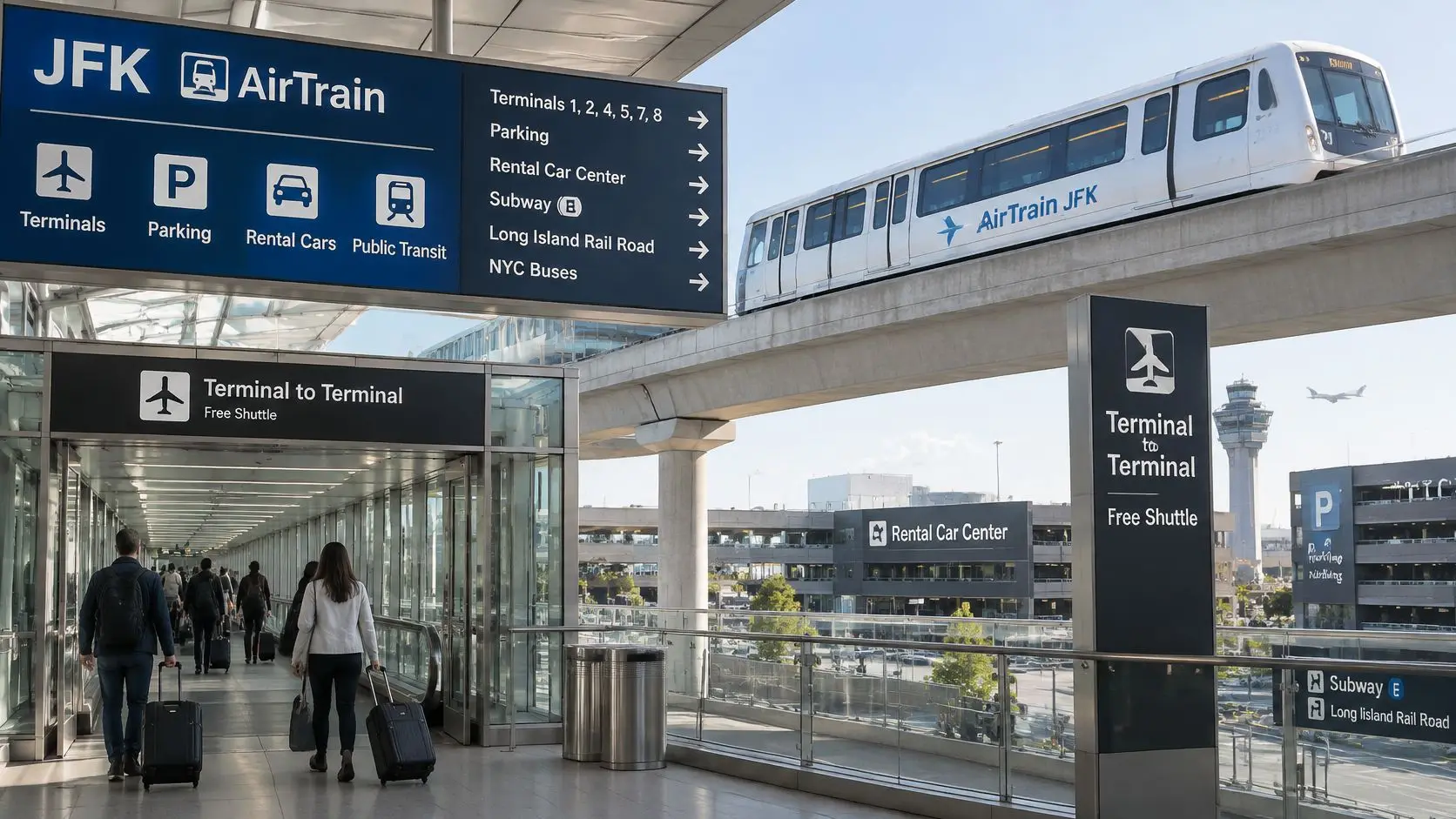
The most misunderstood part of the JFK trip is AirTrain, a connector inside the airport system rather than a ride into Manhattan. Grasping that one fact makes the rest of the comparison clearer.
What AirTrain does and doesn't do
On its JFK AirTrain information page, the airport states that AirTrain connects all passenger terminals, parking areas, the rental-car center, and public-transit links, with terminal-to-terminal journeys taking under 10 minutes and trains generally running every 5 to 15 minutes. The same page lists rides between terminals as free and a trip beginning or ending at Jamaica or Howard Beach at $8.75 per passenger, with travelers continuing from there by subway or Long Island Rail Road. Subway or LIRR connections from Midtown locations such as Penn Station or Grand Central Madison reach an AirTrain station in about 20 minutes, JFK reports, avoiding road traffic.
So a transit trip to a Manhattan hotel has at least three parts: the AirTrain ride to Jamaica or Howard Beach, the subway or LIRR ride into Manhattan, and then a walk, a station change, or a short extra ride to the actual door. Each part involves fare payment, platform waiting, and moving bags on and off a train.
Counting friction instead of fare
JFK's public transportation page adds that AirTrain stations and trains are ADA-compliant, accommodate mobility devices and luggage, and that public transportation is the best option for avoiding traffic. That accessibility is real, but an accessible route on paper isn't automatically an easy route in practice. A mixed-mobility group still has to solve transfers, elevators, and keeping everyone on the same train.
A practical comparison counts total friction rather than only fare:
- Transfers: AirTrain plus subway or LIRR means at least one change, often with a walk between platforms.
- Elevator dependence: A wheelchair or a stack of heavy cases turns stairs into a search for a working elevator.
- Luggage handling: Every transfer means lifting bags off one vehicle and onto another.
- Group cohesion: Everyone in the party has to catch the same train, make the same change, and find the same exit.
- Coordination: Splitting across taxis or app cars means matching several drivers at the curb.
The useful question: At what group size or luggage load does a private van become simpler, even when transit is cheaper?
Where each option fits
A solo traveler with a carry-on, heading to an address near a station, can reasonably choose AirTrain plus subway or LIRR and accept the transfers. The fare logic is straightforward and the luggage load is manageable. The calculation changes as the headcount grows: every additional traveler means another set of bags on each platform and another person to keep together at every change. A group that includes a wheelchair user, or one working against a fixed check-in or meeting time, has even less room for a missed connection.
A private van removes the transfers, the station changes, and the repeated loading. The party boards at the terminal and steps out at the Manhattan address. Airport Vans NYC plans that vehicle around both passenger count and luggage, for up to 14 passengers subject to bags, so a heavy bag count can reduce the workable headcount and should be stated up front.
The trade-off runs both ways. A van sits in the same road and curb conditions that rail avoids, and it isn't always cheaper than transit or a cab. For a party of two with light bags, transit may be the sensible answer. For a larger party, the van's value is operational simplicity rather than speed or price.
What the Taxi Flat Fare Leaves Out
The $70 flat fare is the number travelers remember, and it is a useful benchmark for one cab ride. The fare pieces come first, because several regulated charges sit on top of that base, and none of them set or describe the price of a private van.
Each charge below comes from the NYC Taxi and Limousine Commission taxi fare page.
| Charge | Amount | When it applies |
|---|---|---|
| JFK-Manhattan flat fare | $70 | Taxi trip between JFK and Manhattan |
| MTA surcharge | $0.50 | Listed on the TLC fare schedule |
| Improvement surcharge | $1.00 | Listed on the TLC fare schedule |
| New York State congestion surcharge | $2.50 | Yellow taxis when applicable |
| Weekday rush-hour surcharge | $5 | 4 p.m. to 8 p.m. on weekdays, excluding legal holidays |
| Tolls and tip | Not part of the $70 | Paid separately from the flat fare |
Reading the surcharges correctly
A traveler using this table adds only the charges that match the trip's clock time and direction. A midday weekday ride carries no rush-hour surcharge. A 5 p.m. weekday ride does, unless that day is a legal holiday. The congestion surcharge applies to yellow taxis when applicable, rather than to every vehicle at the curb. Tolls and tip sit outside the flat fare either way, so the $70 works as a starting point rather than a final total.
One fare, one cab
The flat fare covers one taxi trip, not each passenger, and not the whole party when the party needs more than one cab. Three people with moderate bags ride for one flat fare plus the applicable extras. Nine people with nine checked bags may need three cabs, which means three flat fares, three sets of surcharges, three tips, and three separate curbside loadings to coordinate.
A wedding party of seven landing during weekday rush hour faces that math directly. The trip takes at least two cabs, each carrying the rush-hour surcharge, plus tolls and tips on both. The two cabs may not reach the hotel together, and the second cab's arrival time is out of the group's hands.
A flat fare keeps one cab predictable but does not simplify a multi-cab trip.
Why the van price is separate
A private Sprinter quote is not calculated from the regulated taxi fare, so a van price cannot be inferred from $70. The quote is requested separately and built from the group's own inputs: passenger count, luggage volume, pickup terminal, and Manhattan destination. Those details determine whether one vehicle can carry the party and how it should be configured.
No quote is promised to match a taxi total. The comparison serves a narrower purpose: it separates the costs that are regulated and fixed, like the TLC fare schedule, from the costs that depend on the group itself. A party that fits in one cab can use the table with confidence. A party that does not should weigh the full multi-cab total against a single-vehicle quote rather than against $70 alone.
How to Plan a JFK Curbside Pickup
Most pickup problems at JFK happen before the van reaches the curb. A wrong terminal, an early arrival with nowhere to wait, or a party still at baggage claim can each unravel an otherwise sound plan. A curbside pickup works like a relay handoff: the van's leg only succeeds if the group is already in position when it arrives.
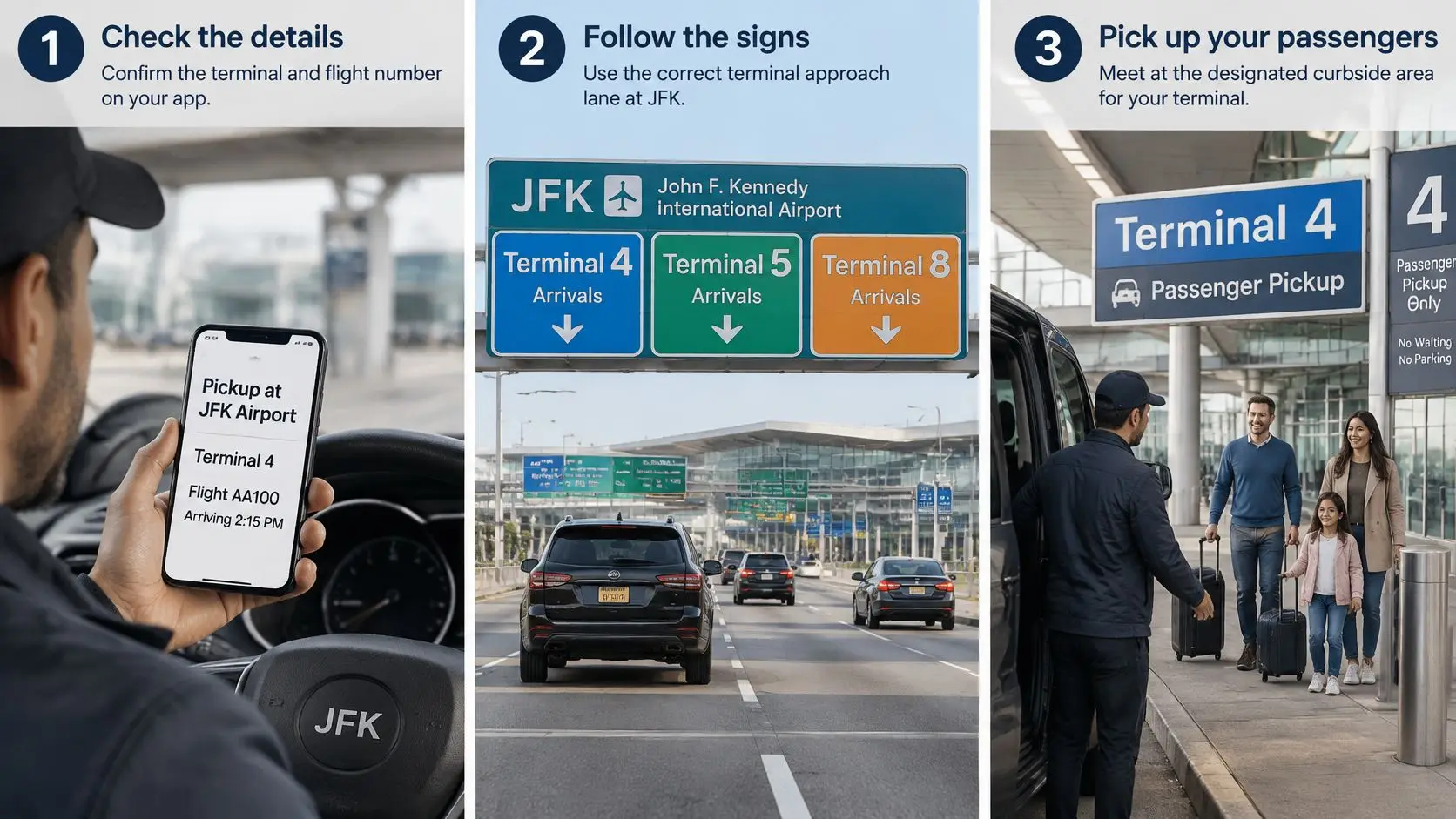
The airport's JFK transportation page supplies the fixed details behind the steps below: the Van Wyck Expressway serves Terminals 1 and 4, the JFK Expressway serves Terminals 5, 7, and 8, the Cell Phone Lot is free and less than five minutes from all terminals, and the Lefferts Boulevard wait lot is free and connects to every terminal through an AirTrain ride of approximately eight minutes. The page also warns that construction is causing delays for drop-offs and pickups across taxis, ride apps, and private vehicles.
The pickup steps
- Confirm the airline terminal, not only JFK. Sharing the flight number before dispatch lets the operator check the arrival terminal and follow schedule changes. "JFK arrivals" isn't a meeting point.
- Use the matching roadway. The terminal determines the approach road, and a wrong-terminal approach adds repositioning time in airport traffic.
- Build in a buffer beyond map drive time. Terminal approach and loading need time that a map estimate doesn't include, and construction slowdowns stretch that gap further.
- Treat the curb as active loading only. Terminal curbsides are restricted to active pickup and drop-off, with no unattended parking permitted, and a vehicle left unattended may be towed. An early van has nowhere to wait at the door.
- Stage at a free wait lot. A driver who arrives early waits in one of the free lots described above and moves to the terminal only when the party is walking out.
- Meet at the stated point, ready to load. The full party, bags collected, should stand at the agreed door or curbside point so loading happens in one pass. With a group, headcount and bag count decide how long that pass takes.
| Location | Route or wait point | Notes |
|---|---|---|
| Terminals 1 and 4 | Van Wyck Expressway | Direct access |
| Terminals 5, 7, and 8 | JFK Expressway | Direct access |
| Terminals 2, 3, and 6 | No active passenger terminal pickup | Confirm the operating terminal before dispatch |
| Cell Phone Lot | Free wait point | Less than five minutes from all terminals |
| Lefferts Boulevard lot | Free wait point | About eight-minute AirTrain ride to every terminal |
Why timing details matter
A group pickup has more moving parts than a solo one. International arrivals take longer to clear, checked bags arrive in waves, and one traveler stopping for coffee holds up the loading for everyone. Precise curbside instructions, covering the terminal, the door, and the meeting point, keep the driver and the party looking in the same place at the same time.
The same terminal check applies in reverse. A Manhattan pickup bound for JFK still needs the correct terminal for drop-off, because the roadway choice depends on it. The guide to planning a JFK airport pickup walks through those details alongside your flight information.
Flight details also give the operator something to work with when a schedule changes. A delayed arrival gets handled in follow-up rather than discovered at the curb. Underneath all of this planning sits one rule: only operator confirmation creates the reservation; the quote request does not. A party that treats a submitted form as a booked van risks having no vehicle at all.
Trips That Need One Vehicle
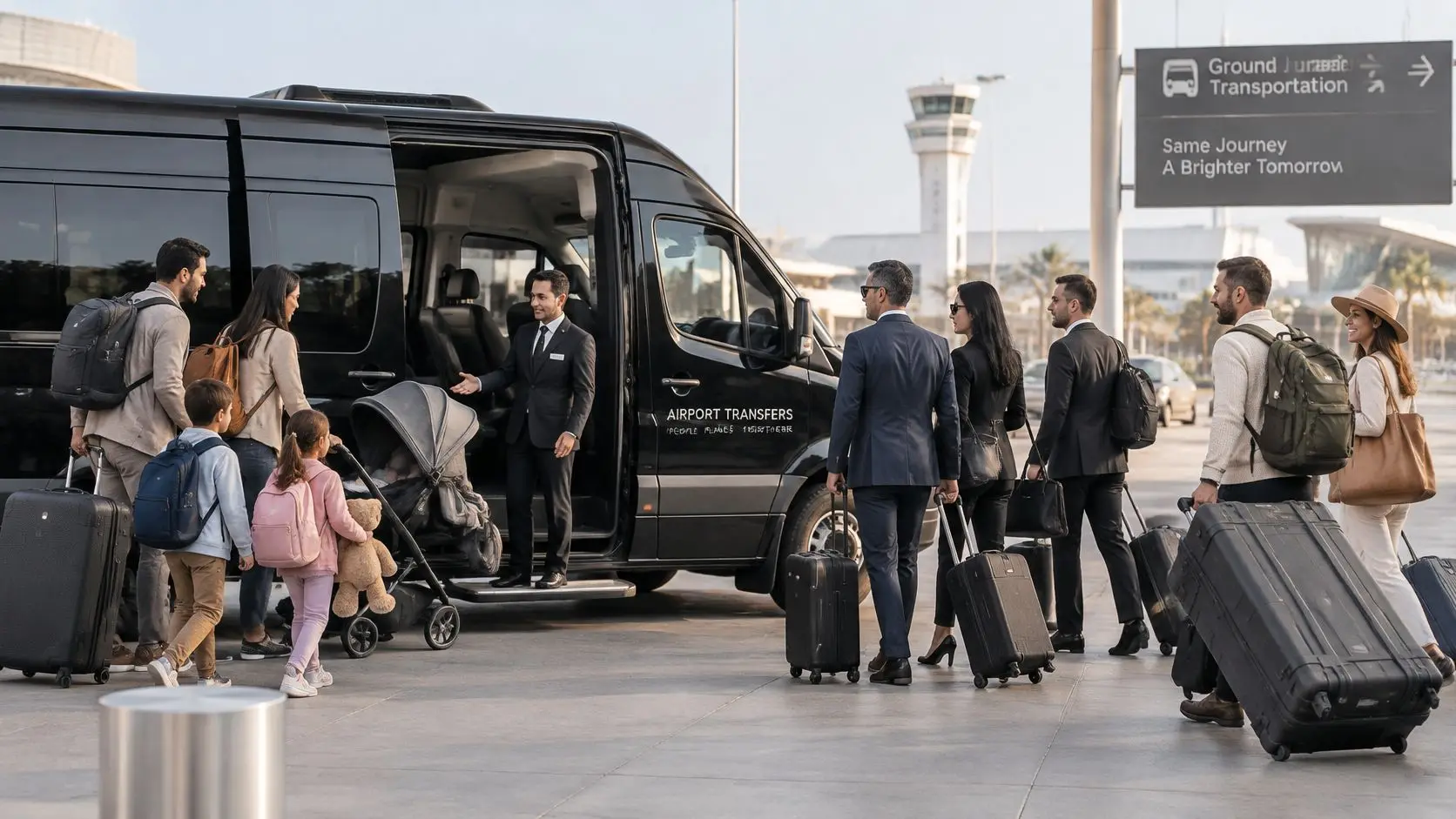
Headcount and luggage decide when one dedicated vehicle beats any split, and three common parties show where that line falls.
Three worked situations
A family flying home faces the problem in reverse. The return flight leaves early, the children are half awake in a hotel lobby, and every bag has to move at once. Two cars means two pickup times and the chance that the late car holds up everyone's check-in. One van means one departure and a single driver accountable for the whole party.
A corporate coordinator moves eight executives from JFK to a Manhattan office for a meeting. Booking several cars works like issuing separate tickets for the same event: eight tired travelers match to multiple drivers, and the meeting effectively starts when the last car pulls up. One vehicle converts eight arrivals into one.
A hotel concierge or event planner arranges a pickup for guests they have never met. The friction here is recognition: the driver and the party are strangers, so the plan has to leave no guessing about which flight is being met or where the group is headed. Coordinators comparing vehicle sizes for parties like these can review the notes on 12-passenger van rental in NYC when estimating how headcount and luggage interact.
Inter-airport trips are separate requests
Because the trip starts at JFK, travelers sometimes assume a JFK to LGA or JFK to EWR movement folds into a Manhattan transfer; it requires its own quote request with its own timing and capacity questions. The NYC transportation resources page separates airport access by provider, noting that the MTA provides transportation to LaGuardia and JFK, while NJ Transit and Amtrak provide service to Newark Airport. That split reflects the different jurisdictions around the three airports.
EWR sits in New Jersey, not inside New York City, which affects routing and timing for any connection. An inter-airport itinerary also carries two schedules instead of one, so a delay on either flight moves the pickup window the operator plans around.
Destinations such as Brooklyn, Westchester, and other New York or New Jersey locations can be covered through a dedicated quote rather than assumed from a Manhattan route. The operator's route pages describe supported trips, and the gallery shows vehicle photos for parties that want to see the van before requesting.
Request a Quote Before You Count on the Van
A quote request fits one clear situation: the party needs a dedicated Sprinter for a JFK airport shuttle Manhattan trip, with headcount and bags treated as the deciding inputs while solo fare becomes secondary. One vehicle keeps travelers together, and the luggage line decides whether that vehicle is the right configuration.
Send the deciding details once
The earlier comparisons already turned on airport, terminal, flight number, destination, passenger count, and luggage. The quote adds the operating details around them: which curbside door or terminal meeting point applies, whether the flight number should be used for schedule follow-up, and who receives confirmation by phone or email for a family, corporate team, event group, or hotel party.
Airport Vans NYC, operated by IONASprinter, works quote first rather than booking a shared seat. Those details let the operator match one non-shared vehicle to the people and the baggage instead of sending a party to improvise at the curb.
What confirmation means
Submitting the form starts a quote request; the trip is reserved only after the operator confirms it. Families, coordinators, and concierges should wait for that confirmation before telling travelers the van is booked.
Hotel concierges, corporate coordinators, event planners, and families use the same form. The practical path is the Airport Vans NYC quote page, the JFK and Manhattan route pages for trip scope, the selected inter-airport pages for connections such as JFK to LGA or JFK to EWR, and the gallery for vehicle photos. Route scope and photos help define the request; confirmation is what makes it a reservation.
The quote does not lock in a fare or remove traffic risk. For a party too large for one taxi, the low-friction move is simple: send the details once, wait for operator confirmation, then count on the vehicle.
Airport Vans NYC provides quote-first private Sprinter van transfers between JFK, LGA, EWR, Manhattan, and other greater NYC destinations, with dedicated, non-shared vehicles for parties that want one coordinated pickup.